
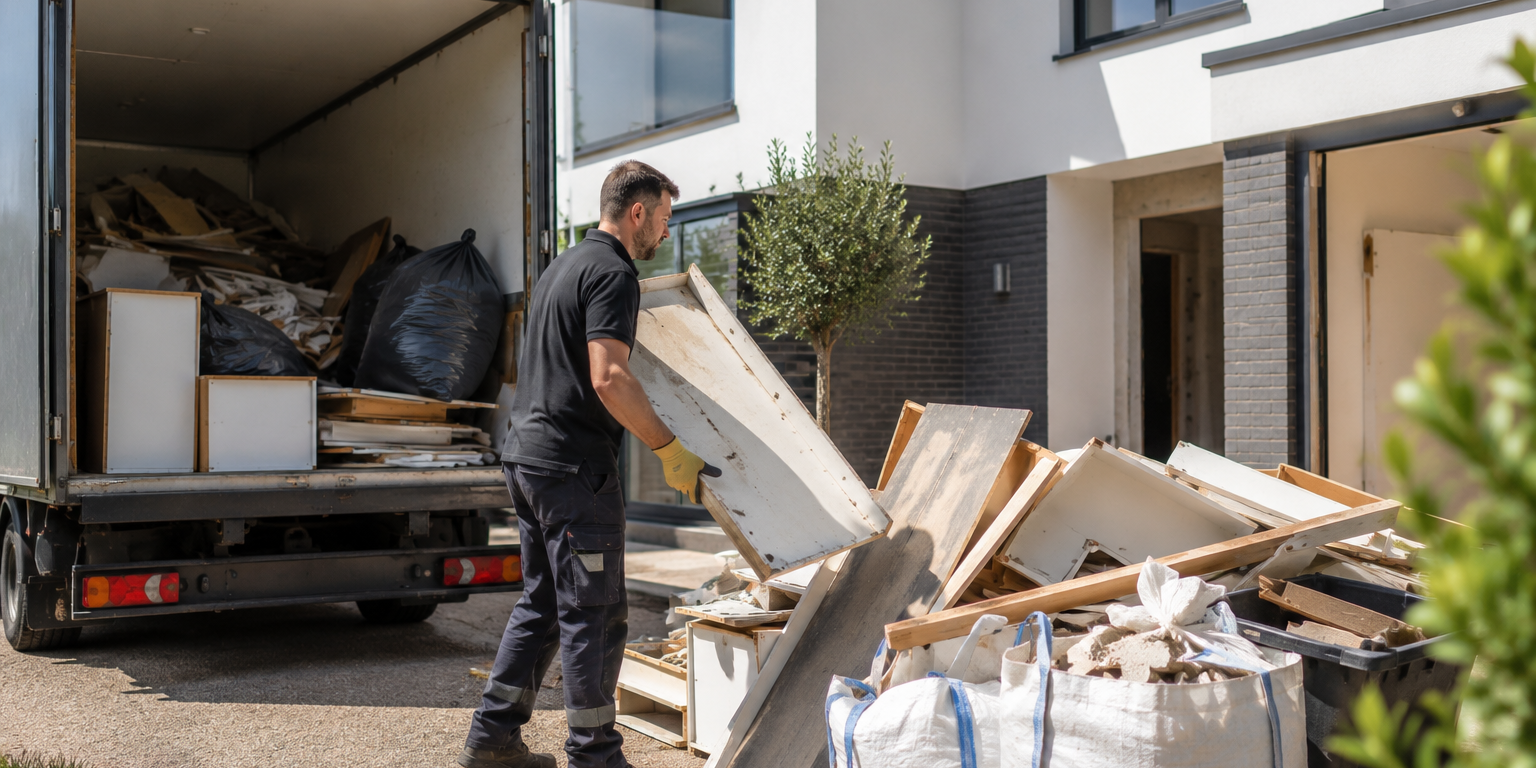
Home improvement projects continue to be popular across Essex and London, with homeowners investing in new kitchens, bathrooms, loft conversions and garden offices. While the finished result is exciting, many people underestimate one important part of the job, what to do with all the waste afterwards.
Broken plasterboard, old kitchen units, timber, packaging, tiles and rubble can quickly fill a driveway or garden. Knowing how to dispose of renovation waste legally can save time, avoid unnecessary costs and help protect the environment.
What Counts as Renovation Waste?
Renovation waste covers almost anything removed during building or refurbishment work, including:
- Bricks and rubble
- Plasterboard
- Timber
- Old kitchen and bathroom units
- Doors and windows
- Flooring
- Metal
- Plastic packaging
- Cardboard
- Old sanitaryware
- Electrical fittings
Some materials can be recycled, while others require specialist disposal.
Can You Take Builders’ Waste to the Local Tip?
Many homeowners assume they can simply load everything into a van and visit their local Household Waste Recycling Centre.
Unfortunately, it’s rarely that straightforward.
Many councils now:
- Limit the amount of DIY waste households can bring.
- Charge for certain construction materials.
- Restrict access for vans.
- Require advance booking.
Some waste types, such as plasterboard, often need to be separated from general waste because they cannot be disposed of in the same way as ordinary household rubbish.
Checking your local council’s rules before loading the vehicle could save you a wasted journey.
Why Hiring a Skip Isn’t Always the Best Option
Skips work well for large building projects, but they are not suitable for every property.
You may need:
- A permit if the skip is placed on the road.
- Enough space on your driveway.
- Time to fill it before collection.
- Someone to ensure prohibited items are not placed inside.
For smaller renovations, many homeowners find they are paying for far more capacity than they actually need.
The Benefits of Professional Rubbish Clearance
Professional rubbish clearance offers a quicker and more convenient alternative.
Instead of hiring a skip or making multiple journeys to the recycling centre, a licensed waste carrier collects the waste directly from your property.
This means:
- No heavy lifting.
- No waiting for skip deliveries.
- No council permits.
- No sorting out different waste streams yourself.
- Fast removal, often on the same day.
It’s particularly useful after kitchen refits, bathroom renovations or decorating projects where waste is bulky but not sufficient to justify a full skip.
Make Sure Your Waste Is Being Disposed of Legally
Whenever you pay someone to remove waste, you remain responsible for ensuring it is handled correctly.
Always choose a registered waste carrier.
Reputable rubbish clearance companies transport waste to authorised recycling and disposal facilities, helping to reduce landfill wherever possible and ensuring everything is handled in accordance with current UK regulations.
Using an unlicensed operator could result in your waste being fly-tipped, and in some circumstances, you may still be investigated if it can be traced back to you.
Recycling Renovation Materials
Many renovation materials can be recovered rather than sent to landfill.
These include:
- Metal
- Untreated timber
- Cardboard
- Plastic packaging
- Some aggregates
- Certain electrical items
Professional clearance companies sort materials wherever possible, helping reduce environmental impact while ensuring recyclable items are processed correctly.
Leave the Mess Behind
Renovating your home should end with enjoying your new space, not wondering how you’re going to get rid of piles of waste.
Whether you’ve completed a new kitchen, replaced a bathroom, decorated throughout your home or finished a landscaping project, professional rubbish clearance makes the final stage quick, safe and hassle-free.
Choosing an experienced, licensed waste carrier gives you confidence that your renovation waste will be removed efficiently and disposed of responsibly, allowing you to enjoy the finished project instead of worrying about the clean-up.